
























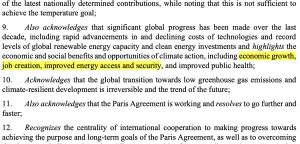
Attacks on critical infrastructure and disruptions to shipping through the Strait of Hormuz have triggered the most severe oil and gas market volatility since Russia’s invasion of Ukraine in 2022. A disruption at the world’s largest LNG export facility triggered gas price increases of around 50 percent in a single day. The International Energy Agency (IEA) has warned that the world may be facing the worst oil supply disruption in history.
In response to the cirsis, the Global Renewables Alliance has launched a 5-point Renewables Action Plan, calling on governments to urgently accelerate renewable deployment and break the recurring cycle of energy crises. The five-point plan identifies immediate priorities to unlock renewable growth: fast-track emergency permitting, address grid and storage blockers, mobilise financing now, move swiftly to electrification and scale up supply chains.
The Global Renewables Alliance (GRA) has issued a statement launching a five-point Renewables Action Plan, calling on governments to urgently accelerate renewable energy deployment in response to renewed global energy price shocks.
The Double Down, Triple Up campaign mobilised the world behind a clear, ambitious goal: triple global renewable energy capacity by 2030 while doubling energy efficiency.
Launched during Climate Week NYC in September 2023, the campaign united businesses, investors, civil society and political leaders around a single call to action. Through coordinated advocacy, high-level engagement and a growing coalition of more than 300 organisations, GRA helped turn ambition into political reality.
Just three months later, governments delivered. At COP28, world leaders agreed the historic global target to triple renewables this decade, marking the first time renewable energy capacity growth was embedded in a multilateral climate outcome.
Today, Double Down, Triple Up has moved from mobilisation to implementation. GRA now works with governments, COP Presidencies, international institutions and the private sector to turn the 3xRenewables commitment into concrete national plans, investment pipelines and real-world projects.
This is not just a target. It is a global delivery agenda.


COP28 delivered the historic UAE Consensus, an ambitious negotiated response to the First Global Stocktake charting progress against the Paris Agreement. It includes unprecedented language around transitioning away from fossil fuels in a just, orderly and equitable manner. The negotiated text – agreed by 198 Parties in Dubai – also includes a number of global goals, such as calls for tripling renewable energy, halting deforestation and doubling energy efficiency by 2030.
Renewable energy is already transforming economies. It creates jobs, strengthens energy security, lowers costs and drives growth.
To reflect today’s political and economic realities, GRA launched the Jobs, Security, Growth campaign in April 2025 to reshape how the energy transition is communicated and understood.
More than 100 businesses signed a joint statement calling on leaders to frame renewable energy not only as a climate solution, but as a cornerstone of prosperity, resilience and competitiveness. Since then, GRA has worked with political leaders, industry champions and global coalitions to embed this new narrative across policy debates, public communications and international processes.
The impact has been tangible. The Jobs, Security, Growth framing has been adopted by governments and institutions, and was even reflected in the final agreement text at COP30, signalling a shift in how the global community positions clean energy in economic and political terms.
As global momentum grows, this narrative is helping unlock faster action by connecting renewable energy to the priorities that matter most: livelihoods, stability and economic opportunity.


The COP30 final agreement recognised renewable energy as a driver of economic growth, job creation, improved energy access and stronger energy security.
Coordinated by GRA and We Mean Business Coalition, hundreds of companies shared stories across social platforms showing how climate leadership delivers jobs, security and growth.

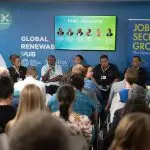
At COP30, GRA elevated the campaign into the core of negotiations, hosting high-level discussions at the Global Renewables Hub and convening business and institutional leaders at a flagship reception.

GRA’s Brazilian Private Sector Mobilisation Committee engaged national and international media at Pre-COP, spotlighting strong business backing for accelerating the energy transition.

During UN General Assembly and Climate Week NYC, a coalition of companies reset the global narrative in the New York Times: renewables deliver jobs, security and growth.

Ahead of the Clean Energy Ministerial in Busan, GRA and Climate Group urged Korean leadership to strengthen competitiveness and security through renewable energy.

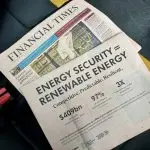
More than 130 private-sector organisations backed a Financial Times advertisement calling for a modern energy system built on renewables to strengthen security and economic resilience.

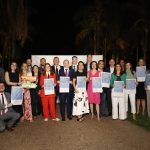
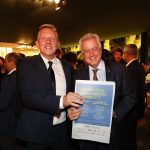
Over 145 companies and associations united to call on governments to accelerate renewable energy and energy efficiency to strengthen energy security.

A global poll published by E3G, Beyond Fossil Fuels and We Mean Business Coalition found that 97% of executives support transitioning to a renewable-based power system.
Across markets and sectors, businesses are building renewable energy projects, electrifying operations, unlocking finance, transforming supply chains and creating the demand that drives clean energy growth at scale. They are proving every day that tripling renewable capacity by 2030 is not a future vision. It is happening now.
Explore the success stories to see how they are driving jobs, energy security and economic growth while delivering the 3xRenewables target.
Tripling renewable energy by 2030 depends on removing the barriers that slow projects down and scaling the solutions that make clean energy grow faster.
That’s why GRA focuses its campaigns on the areas that unlock real-world delivery: expanding grids and storage, accelerating electrification, scaling corporate renewable energy sourcing, mobilising finance, speeding up permitting and strengthening supply chains.
Through global advocacy, we are driving major political commitments, including a worldwide push for electrification and the Global Grids and Storage Pledge to modernise power systems for a renewable-powered future.
These efforts are anchored in GRA’s 3xRenewables Action Agenda, which sets out the concrete policy reforms needed across each of these enablers to turn targets into projects and investment on the ground.
With action on finance, supply chains, permits and grids, the full renewables potential can be unleashed, providing the needed 11.000 renewable gigawatts by 2030.
More than 170 countries, subnational governments and organisations now support the COP29 Global Energy Storage and Grids Pledge. The pledge sets essential 2030 targets for 1,500 GW of energy storage and 25 million kilometres of modernised grid infrastructure, reinforcing the global commitment to integrate and accelerate renewable energy deployment.
To triple renewable energy by 2030, the world must expand grids and energy storage at unprecedented speed. Without modern, flexible infrastructure, new wind and solar capacity cannot connect to the system, power cannot flow where it is needed, and reliability cannot be maintained.
Flexibility is the foundation of a clean, secure and just energy future. It enables countries to integrate large volumes of renewable energy, stabilise electricity systems, support electrification, and reduce reliance on volatile fossil fuel imports.
How Solar+Storage, grid-forming technologies and market reform can transform centralised grids into flexible systems ready for renewable abundance.
A practical framework to unlock capital for modern grids, cut financing costs and deliver the infrastructure required for a renewable-powered future.
A call to set and track ambitious global grid targets, scale investment and implement immediate reforms to turn grids from bottlenecks into enablers of 3xRenewables.
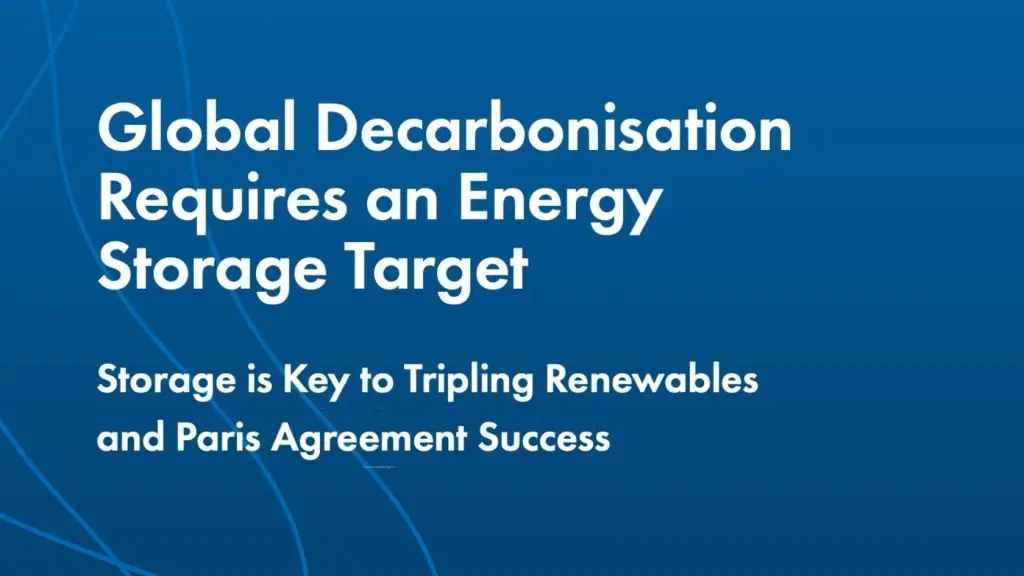
Why tripling renewables requires a 1.5 TW global storage target, longer durations and diversified technologies to ensure system flexibility and reliability.
Despite record renewable growth, meeting the COP28 UAE Consensus to triple capacity by 2030 now requires average annual additions to more than double – highlighting the urgency of stronger grids, greater system integration and accelerated deployment.
Concrete policy recommendations to align renewable deployment, electrification and grid expansion to strengthen energy security and industrial competitiveness.
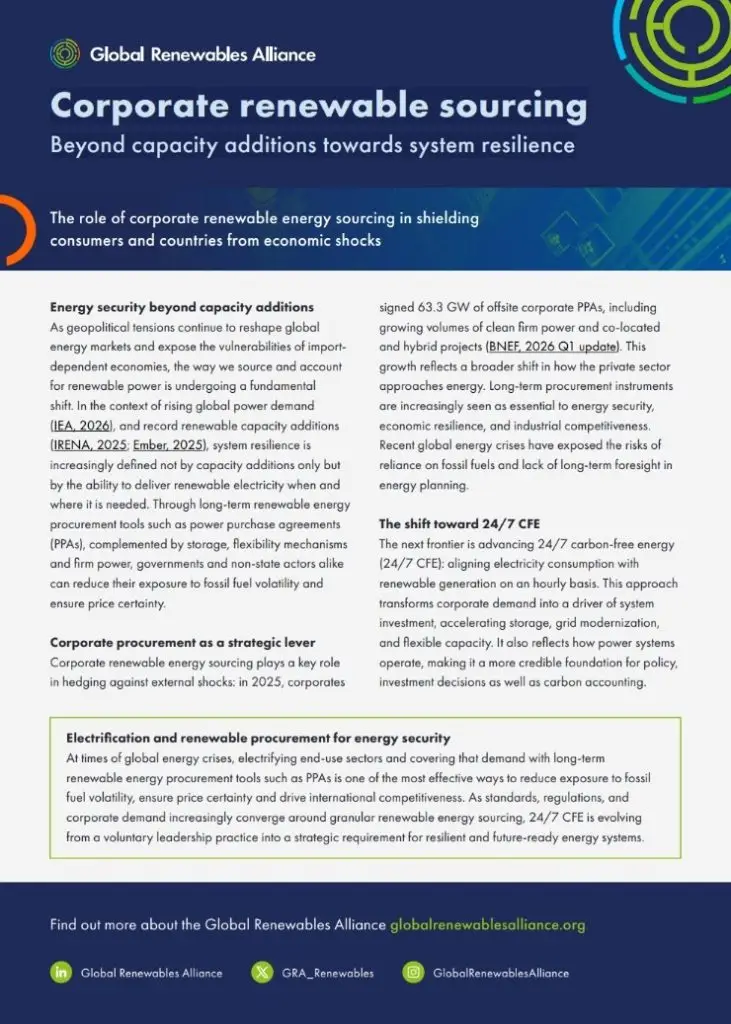
Corporate demand is a key enabler of the renewable energy transition. When companies commit to buying renewable energy, investment flows into new projects, turning ambition into real deployment. These transactions do not just help finance new generation, they strengthen long-term energy security, and drive economic growth by enabling investment in grids, storage, and supporting infrastructure.
Through power purchase agreements and onsite installations, companies have already added more than 160 GW of renewable capacity to grids worldwide. The private sector has driven 75% of renewable investment from 2013 to 2020, with market-based corporate sourcing accounting for 20%. Hundreds of global companies have committed to 100% renewable electricity through initiatives such as RE100 and 24/7 Carbon-Free Energy. Their demand is pulling new clean capacity into markets at speed.
As renewable penetration grows, how clean power is sourced matters increasingly. High-impact hourly matched clean energy procurement aligns electricity consumption with clean generation in real time, helping integrate renewables more efficiently into the grid.
For renewables to expand at speed, money needs to flow and projects need to move forward. Scaling corporate sourcing requires progress on market designs, policy frameworks, data accessibility and technology at the same time.
Corporate buyers, renewable suppliers and policymakers have a unique opportunity to collaborate and enable competitively priced renewable energy at unprecedented scale, helping deliver the 3xRenewables target.
Corporate renewable buying is shifting fast — this policy paper shows how tailored frameworks and 24/7 clean energy procurement are unlocking real corporate demand and strengthening energy security.
Turning corporate ambition into system-wide renewable deployment across Asia-Pacific.
Covering 11 Asia-Pacific markets, this report shows how hourly matched clean energy procurement can accelerate power sector decarbonisation, scale renewables and storage, and align corporate demand with national transition pathways.
Published in 2024, this policy paper sets out recommendations to reform market frameworks and enable corporate renewable energy procurement at scale.
By shifting transport, industry and buildings from fossil fuels to clean electricity, electrification expands demand for renewables at scale and enables a more efficient, integrated energy system. It is the bridge between renewable capacity growth and economy-wide transformation.
GRA is actively shaping the global conversation on electrification and renewable abundance. Through high-level media engagement and strategic policy work, we are advancing stronger electrification strategies, deeper cross-sector collaboration and practical reforms that accelerate clean power adoption.
Concrete policy recommendations to align renewable deployment and electrification strategies to strengthen energy security and industrial growth.
A geopolitical case for the shift from petrostates to electrostates and why electrification will reshape global power and competitiveness.
Tripling renewable energy by 2030 will require an unprecedented surge in investment. The capital is available globally, but it is not flowing fast enough or fairly enough.
Delivering the 3xRenewables target requires around USD 8.6 trillion in investment by 2030. Today, annual renewable investment remains far below the level needed to stay on track, with the largest gaps in emerging markets and developing economies. Closing this financing gap is essential to unlock projects, reduce risk and accelerate deployment at scale.
GRA is working to bridge that gap.
Throughout the year, we convene investors, financial institutions, businesses, governments and knowledge partners in targeted discussions focused on how to unlock capital for 3xRenewables. These strategic dialogues tackle the real barriers to scaling finance, from cost of capital and risk mitigation to pipeline development and policy stability. By aligning public and private actors, we work to turn global ambition into bankable projects.
Our Financing 3xRenewables by 2030 report provides the financial blueprint. It shows that roughly 72 percent of the required investment must come from debt financing, while 28 percent must come from equity. Scaling both is critical. Lowering the cost of debt, strengthening equity participation and de-risking projects in emerging markets will determine whether capital flows at the speed required.
Finance is not a side issue. It is the lever that will decide whether 3xRenewables becomes a political promise or a delivered reality.
A new GRA report shows how nearly USD 8.6 trillion in capital – and the right policies – can deliver the finance needed to triple renewable energy by 2030.
Renewables are one of the fastest, cleanest, most cost-effective and secure ways to reduce pollution and transition away from fossil fuels in this crucial decade. Yet, despite record-breaking growth, deployment is still way below achieving 1.5°C temperature goals and the global target to triple renewable energy by 2030.
Collective action from governments, individuals, communities, public and private sectors can make a difference and accelerate the pace of renewable energy growth. Political leaders have a chance to drive investment and accelerate the clean energy transition over the next 12 months by setting specific and actionable renewable energy targets in their national climate plans and supporting global targets for energy storage and grids.
This call to world leaders spells out this unique opportunity governments have to Now Deliver Change – it is supported by a global coalition of stakeholders from industry, finance and civil society, and is part of the Mission 2025 cross-sectorial advocacy.
The world needs 3xRenewables for a clean, secure and just future.

By COP30 in Brazil, all NDCs are expected to have been submitted and their combined ambition evaluated. Will the world's countries succeeded in turning the global ambition into national plans?
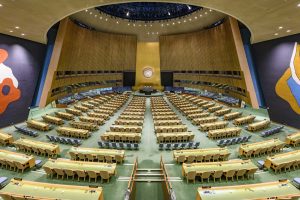
Following the UN Climate Action Summit, the Global Renewables Alliance issued a Statement on the national climate plans (NDCs) announced.
"It’s not too late to deliver ambitious climate plans," urges the private sector the 182 governments yet to submit their NDCs. The call is echoed by campaign supporters over social media.
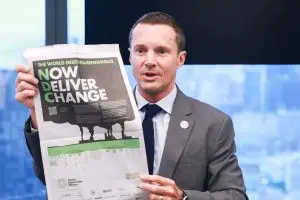
At the first day of the Global Renewables Summit in New York City, GRA and over 200 organisations, launched the call on governments to Now Deliver Change. The campaign was seen in The New York Times and across the press and social media.